
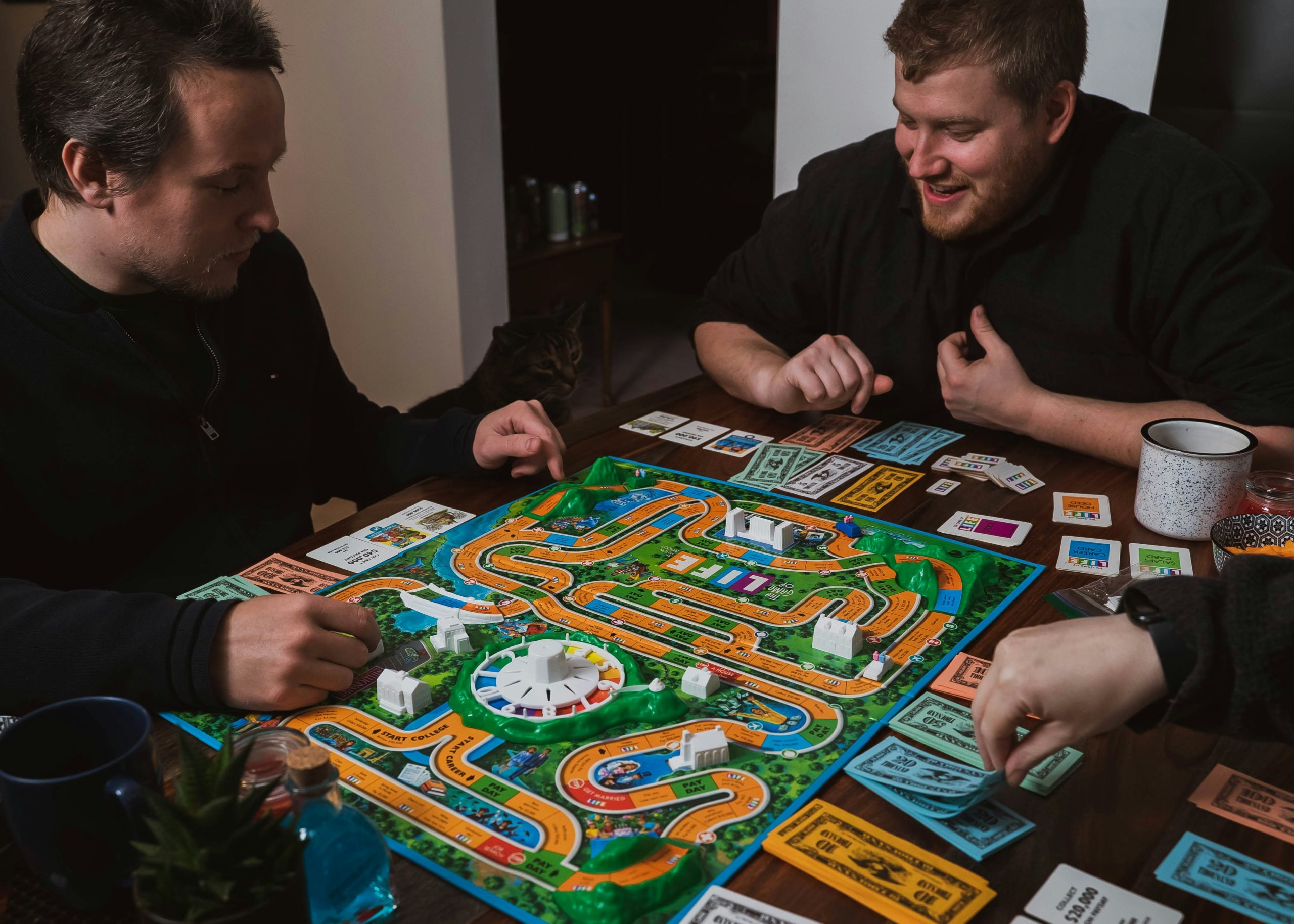
If you run a tabletop gaming venue — a board game café, a friendly local game store with a play area, a dedicated TTRPG studio — you already know the pain I’m describing. A customer finds you online, wants to book a table for Saturday afternoon, and then… what? They DM you on Facebook. They send a message on Discord. They phone up. You reply when you can, confirm a table manually, and hope they actually show up. Meanwhile, three other people asked the same question and you’ve now double-booked table two. This is how most gaming venues handle table bookings in 2026. And it’s wild that nothing has been built to fix it.
How It Actually Happens
Spend five minutes on any FLGS Facebook group or r/boardgames thread where store owners talk shop, and you’ll find the same story repeated across dozens of venues. Bookings come in through Instagram DMs, through Google Maps messages, through a contact form that dumps into a general inbox, through a spreadsheet shared between two members of staff who don’t always speak to each other before the weekend shift. Some venues use generic booking tools — the kind built for hair salons or meeting rooms — and spend hours configuring something that almost works but doesn’t understand changeover time between sessions, or that a party of six needs two tables pushed together, or that you close on Tuesdays. Some venues don’t take bookings at all. They run walk-in only and turn people away when they’re full, or they underbook to stay safe, leaving tables empty. None of this is the fault of the operators. There simply hasn’t been a piece of software built specifically for this problem.
Why Generic Tools Don’t Cut It
I spent a long time looking at what venue owners were using before I wrote a single line of code. The options fall into a few categories:
Generic booking software
(the kind built for salons, restaurants, or coworking spaces) almost fits. You can stretch most of them into something resembling a table booking flow. But they don’t understand the concept of table capacity in the way a game store does. They don’t know what a changeover buffer is. They can’t automatically assign the right table to the right booking based on party size. You end up building workarounds, and the workarounds break.
EventBrite or similar ticketing tools
work for one-off events but not for recurring open-play bookings where availability changes week to week based on your actual opening hours.
Google Calendar or a shared spreadsheet
— honestly used by more venues than you’d expect. It works until it doesn’t. It doesn’t handle payment. It doesn’t give customers a way to self-serve. It doesn’t tell you when you’re fully booked without counting manually.
Just not offering bookings.
The invisible cost of this one is real. Customers who want certainty before they travel — especially families, or groups planning a campaign night — will choose a venue that lets them book over one that doesn’t. You lose bookings you never even knew you lost.
What We Built
Dice Boss is an online table booking platform built specifically for tabletop gaming venues. Nothing more, nothing less. A customer visits your public booking page, picks a date and time, tells you how many are in their party, and books. The platform automatically assigns the right table, checks it against your actual availability, applies your changeover time between sessions, and either confirms the booking instantly or holds it for your approval. If you take paid bookings, payment goes straight to your bank account via Stripe. You see everything in a dashboard. No inbox management. No back-and-forth. No double-bookings. The things that took weeks to get right were the things that generic tools always get wrong: –
Availability is calculated properly.
Opening hours, table-specific blocks, venue-wide closures, and existing bookings all factor in. A slot is only offered if it genuinely exists. –
Table assignment is automatic.
You don’t pick a table per booking. The platform finds the best available table for the party size and assigns it. You can override if you want to, but you usually won’t need to. –
Paid and free bookings coexist.
Some of your tables are paid, some are free. Dice Boss handles both. You decide per table. –
Your timezone is yours.
Whether you’re in London, Melbourne, or Toronto, availability is calculated in your local time. This sounds obvious. It took longer to get right than anything else.
Why We’re Focused on Gaming Venues Specifically
There’s a tempting product decision that we explicitly chose not to make: build a generic booking tool and market it to gaming venues as one vertical among many. We didn’t do that. Dice Boss is only for tabletop venues. It will always be primarily for tabletop venues. The reason is simple: the domain knowledge matters. The way a board game café thinks about its tables is different from the way a restaurant thinks about its tables. The language is different (sessions, changeover, party sizes for specific games). The payment model is different (hourly rate or free play with a cover charge). The booking lifecycle is different (some venues want to approve bookings manually; others want instant confirmation). A tool that’s designed for this specific world is better than a tool that’s designed for all worlds and happens to also work for this one. We also think the tabletop gaming industry deserves better software. It’s an industry of passionate operators who are often running their venues on a shoestring, doing it because they love the hobby and the community. They shouldn’t have to spend their time managing a booking spreadsheet.
Who It’s For
Dice Boss is built for:
Board game cafés
The obvious fit. You’re already charging by the session or by the hour. Online booking is the natural next step.
Dedicated TTRPG and D&D venues
Spaces that run regular campaigns and one-shots and need to manage table availability properly.
Friendly local game stores with a play area
You’ve got tables, you run events, your regulars want to be able to book ahead.
Wargaming clubs with physical space
Same problem, different miniatures.
Hobby shops with a gaming area
Even a small play area benefits from letting customers book rather than risk turning up to find it full. If you run a space where people play games at tables, and you want those people to be able to book those tables online, this is for you.
The Launch Offer
We’re at the beginning. There are no case studies yet, no long list of venues, no years of track record. What there is: a platform that works, a team that cares deeply about this community, and a genuine belief that this is a problem worth solving properly. To mark the launch, we’re giving a limited number of businesses 3 months completely free. No obligation to continue. We want real venues using Dice Boss, giving us real feedback, and hopefully finding that it makes their lives a little easier. If that sounds like something worth trying, you can sign up at diceboss.app and claim the offer now. We’d love to hear from you, whether you sign up, or whether you’ve tried to solve this problem a different way and want to tell us what we’ve got wrong. This community is how Dice Boss gets better.
Matt – Founder, Dice Boss